Context
- With the European Green Deal and the Renovation Wave, the EU is promoting the upgrade of the building stock.
- The potential of smart technologies in the building sector is strongly emphasised in the 2018 revision of the European Energy Performance of Buildings Directive (EPBD) and the SRI was confirmed as an official EU instrument.
- The proposal for a revision of the EPBD adopted in 2021 envisages further strengthening the SRI to ensure widespread adoption in large new buildings.
What is the SRI?
The SRI is a common EU scheme for assessing the smart readiness of buildings. The SRI assesses how smart a building is in terms of:
- responding to resident needs (e.g. health, comfort, well-being, etc.)
- using energy-efficient control strategies
- interacting with energy grids (energy flexibility/demand response and system integration)
Why is it relevant?
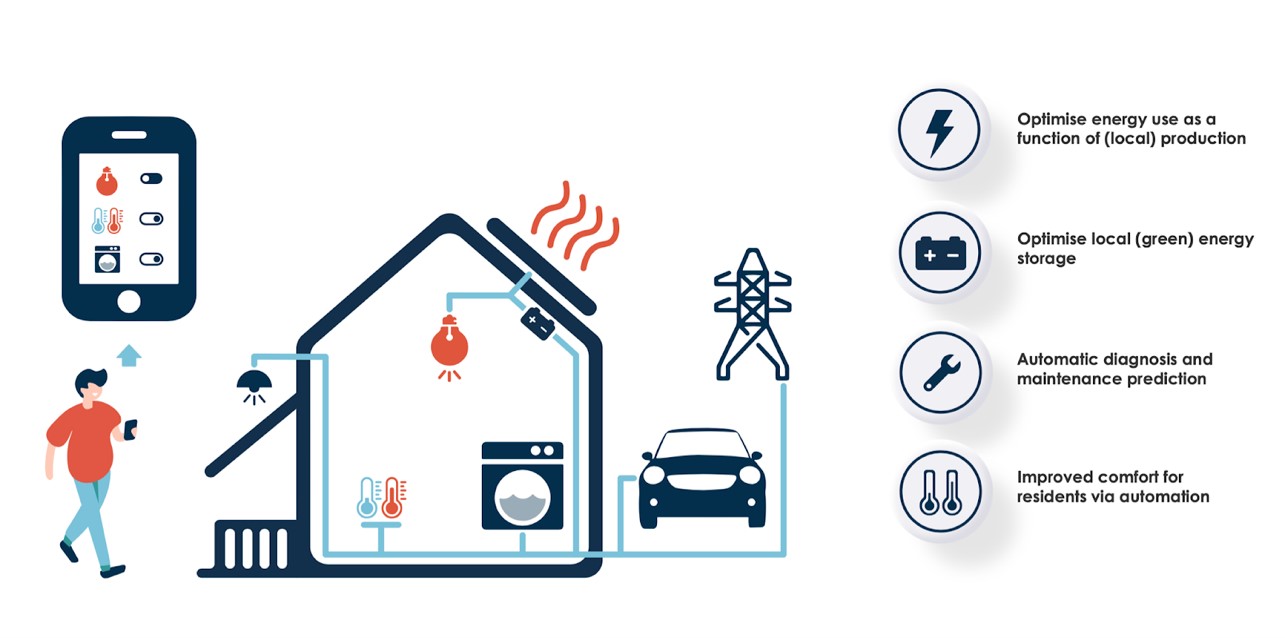
Using smart technologies in buildings can be a cost-effective way to create healthier and more comfortable buildings with lower energy consumption and CO2 emissions.
For example:
- Digital technologies such as smart thermostats and lighting control pay for themselves within 2 years.
- Smart technologies, such as automated shading control or ventilation control based on air quality sensors, can also improve health, well-being and comfort.
- Intelligent planning of energy consumption (white goods, electric vehicles, etc.) can lead to significant energy savings while helping to balance the grid.
The SRI provides a common language for building stakeholders (owners, designers, solution providers, policy actors, etc.) to discuss how buildings can be made smarter and what benefits this will bring.
What is the impact?
At building level, average energy savings of 30% can be achieved when implementing an advanced package of smart building technologies. Some of the single optimisation measures are easy to implement with a short payback period (e.g. replacement of thermostatic valves, boiler and pump adjustments, night reductions, etc.).
Depending on how it is implemented across the EU by 2040, the SRI has the potential to deliver annual savings of:160 TWh aan primair energieverbruik.
- 23 million tonnes of CO2 emissions
- 12.5 billion in energy costs for consumers
- 1.4 billion in energy system costs.
- Moreover, it could bring health and wellness benefits with annual savings of €6.5 billion and help create 76 thousand jobs.
EasySRI
In autumn 2022, easySRI, a new European project of DEMO, will be launched. This project aims to promote effective implementation of the Smart Readiness Indicator within European member states. Among other things, a web platform will be developed for this purpose, offering services for automated calculation of the SRI.